

-
Table of Contents
Understanding 3rd Person in English Writing
When it comes to writing, one of the most important decisions a writer must make is the choice of point of view. Point of view refers to the perspective from which a story is told, and one of the most common points of view used in literature is the third person. In this article, we will explore what 3rd person is in English writing, its different types, and how it can be effectively used to enhance storytelling.
What is 3rd Person?
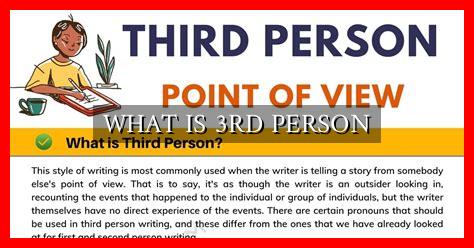
Third person point of view is when the narrator tells the story from an outside perspective, using pronouns such as “he,” “she,” “it,” or “they” to refer to the characters. This point of view allows the writer to provide a broader view of the events in the story, as it is not limited to the thoughts and feelings of a single character.
Types of 3rd Person Point of View
There are three main types of third person point of view:
- Third Person Limited: In this type, the narrator only knows the thoughts and feelings of one character. The reader is limited to the perspective of that character, providing a more intimate view of the story.
- Third Person Omniscient: In this type, the narrator knows the thoughts and feelings of all the characters in the story.

. This allows for a more objective view of the events and can provide insight into multiple characters’ motivations.
- Third Person Objective: In this type, the narrator does not reveal any character’s thoughts or feelings. The story is told from an outside perspective, focusing solely on the actions and dialogue of the characters.

Examples of 3rd Person Point of View
One classic example of third person point of view is Jane Austen’s novel “Pride and Prejudice.” The story is told from an omniscient perspective, allowing the reader to see the thoughts and feelings of multiple characters, such as Elizabeth Bennet and Mr. Darcy. This provides a comprehensive view of the social dynamics and relationships in the novel.
Another example is J.K. Rowling’s “Harry Potter” series, which is primarily told from a limited third person perspective, focusing on Harry’s experiences and emotions. This allows the reader to empathize with Harry’s journey and struggles as he navigates the wizarding world.
Benefits of Using 3rd Person Point of View
There are several benefits to using third person point of view in writing:
- Provides a broader perspective of the story
- Allows for multiple character viewpoints
- Creates a sense of objectivity
- Enhances character development
Conclusion
In conclusion, third person point of view is a powerful narrative tool that can enhance storytelling by providing a broader perspective of the events and characters in a story. By understanding the different types of third person point of view and how they can be effectively used, writers can create engaging and immersive narratives that resonate with readers.
For further reading on the topic, you can explore this MasterClass article on writing in third person.
