

-
Table of Contents
What Are the Ethical Implications of Consent
Consent is a fundamental concept in various fields, including medicine, law, and research. It serves as a cornerstone for ethical interactions, ensuring that individuals have the autonomy to make informed decisions about their bodies, data, and lives. However, the implications of consent extend beyond mere agreement; they raise significant ethical questions that warrant careful consideration. This article explores the ethical implications of consent, examining its complexities and the challenges that arise in different contexts.
The Nature of Consent
Consent is often viewed as a straightforward agreement between parties. However, its ethical implications are multifaceted and can be categorized into several key areas:
- Informed Consent: This requires that individuals understand what they are consenting to, including the risks and benefits involved.
- Voluntary Consent: Consent must be given freely, without coercion or undue pressure.
- Capacity to Consent: Individuals must have the mental capacity to understand the implications of their consent.
Each of these aspects raises ethical questions about how consent is obtained and whether it is genuinely meaningful.
Informed Consent in Medical Ethics
In the medical field, informed consent is crucial for ethical practice. Patients must be fully informed about their treatment options, potential risks, and expected outcomes. A notable case that highlights the importance of informed consent is the Canterbury v. Spence case in the United States, where a patient was not adequately informed about the risks of a surgical procedure. The court ruled in favor of the patient, emphasizing that doctors have a duty to disclose information that a reasonable person would want to know before consenting to treatment.
Consent in Research
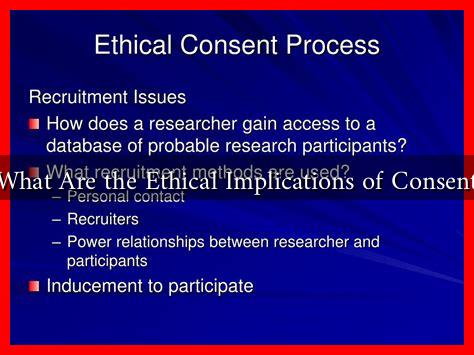
In research, obtaining consent is equally critical, particularly in studies involving human subjects. Ethical guidelines, such as the Belmont Report, outline the necessity of informed consent to protect participants. However, challenges arise in contexts such as:
- Vulnerable Populations: Individuals with limited capacity to consent, such as children or those with cognitive impairments, require additional protections.
- Deception in Research: Some studies may involve deception, raising questions about whether participants can truly give informed consent.
- Data Privacy: In the age of digital research, consent regarding data usage and sharing has become increasingly complex.
For instance, the infamous Tuskegee Syphilis Study, which lasted from 1932 to 1972, involved unethical practices where African American men were misled about their treatment for syphilis. This case underscores the dire consequences of failing to obtain genuine informed consent.
Consent in the Digital Age
With the rise of technology, the concept of consent has evolved. Digital platforms often require users to consent to terms and conditions that are lengthy and complex, leading to a phenomenon known as “consent fatigue.” This raises ethical concerns about whether users truly understand what they are agreeing to. Key issues include:
- Ambiguity in Terms: Many users do not read or comprehend the terms they agree to, which can lead to unintended consequences.
- Data Exploitation: Companies may exploit consent agreements to collect and use personal data in ways that users did not anticipate.
- Revocation of Consent: Users often find it challenging to withdraw consent once given, complicating their ability to control their data.
For example, the Cambridge Analytica scandal highlighted how user data was harvested without explicit consent, leading to significant ethical and legal repercussions.
Conclusion
The ethical implications of consent are profound and far-reaching. From medical ethics to research and digital interactions, the complexities surrounding consent require ongoing scrutiny and dialogue. Key takeaways include:
- Informed consent is essential for ethical practice across various fields.
- Vulnerable populations require special considerations to ensure their rights are protected.
- The digital age presents new challenges in obtaining meaningful consent, necessitating clearer communication and user education.
As society continues to navigate these ethical waters, it is imperative to prioritize genuine consent, ensuring that individuals are empowered to make informed choices about their lives and data.
