-
Table of Contents
Understanding the Social Determinants of Health
Health is influenced by a myriad of factors, beyond just genetics and individual behaviors. Social determinants of health play a crucial role in shaping the well-being of individuals and communities. These determinants are the conditions in which people are born, grow, live, work, and age, and they have a significant impact on health outcomes.
What are Social Determinants of Health?
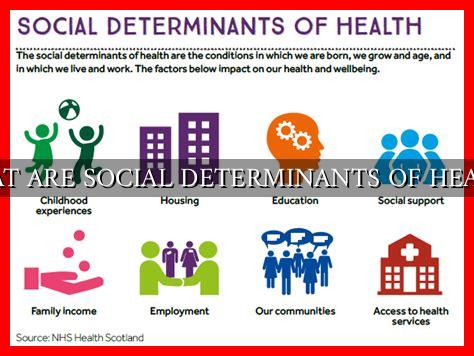
Social determinants of health are the social and economic factors that influence health and well-being. These factors include:
- Income and social status
- Education
- Employment and working conditions
- Access to healthcare
- Social support networks
- Physical environment
- Genetics
Examples of Social Determinants of Health
Let’s delve deeper into some of the key social determinants of health:
Income and Social Status
Income inequality has been linked to disparities in health outcomes. People with lower incomes are more likely to experience poor health due to limited access to healthcare, nutritious food, and safe housing.
Education
Education is a powerful determinant of health.

. Individuals with higher levels of education tend to have better health outcomes, as education equips them with the knowledge and skills to make informed decisions about their health.
Employment and Working Conditions
Unemployment and precarious working conditions can have a detrimental impact on health. Job insecurity, long working hours, and workplace stress can contribute to poor mental and physical health.
Impact of Social Determinants on Health
The social determinants of health have a profound impact on health outcomes. Research has shown that individuals living in disadvantaged communities are more likely to experience higher rates of chronic diseases, such as diabetes, heart disease, and obesity.
For example, a study conducted by the Centers for Disease Control and Prevention (CDC) found that individuals with lower levels of education were more likely to smoke and have poor nutrition habits, leading to higher rates of chronic diseases.
Addressing Social Determinants of Health
Addressing social determinants of health requires a multi-faceted approach that involves collaboration between healthcare providers, policymakers, and community organizations. Some strategies to address social determinants of health include:
- Increasing access to affordable healthcare services
- Improving educational opportunities for disadvantaged populations
- Creating safe and supportive environments for all individuals
- Promoting policies that reduce income inequality
Conclusion
Social determinants of health play a critical role in shaping health outcomes. By addressing the social and economic factors that influence health, we can work towards creating a more equitable and healthier society for all individuals.
It is essential for healthcare providers, policymakers, and communities to collaborate and implement strategies that address social determinants of health to improve the overall well-being of populations.
For more information on social determinants of health, you can visit the World Health Organization’s website.