

-
Table of Contents
How Does Amoxicillin Work Against Bacteria?
Amoxicillin is a widely used antibiotic that belongs to the penicillin group of drugs. It is effective against a variety of bacterial infections and is commonly prescribed for conditions such as pneumonia, bronchitis, and infections of the ear, nose, and throat. Understanding how amoxicillin works against bacteria is crucial for both healthcare professionals and patients to ensure its effective use and to combat antibiotic resistance.
The Mechanism of Action of Amoxicillin
Amoxicillin works primarily by inhibiting the synthesis of bacterial cell walls. This action is vital because the integrity of the cell wall is essential for bacterial survival. Without a proper cell wall, bacteria cannot maintain their shape or protect themselves from external pressures, leading to cell lysis and death.
Inhibition of Cell Wall Synthesis
Amoxicillin targets specific proteins known as penicillin-binding proteins (PBPs) that are involved in the final stages of cell wall synthesis. By binding to these proteins, amoxicillin disrupts the cross-linking of peptidoglycan layers, which are crucial for maintaining the structural integrity of the bacterial cell wall. This disruption results in:
- Weakening of the cell wall
- Increased susceptibility to osmotic pressure
- Eventual cell lysis and death
Types of Bacteria Affected by Amoxicillin
Amoxicillin is effective against a broad spectrum of bacteria, particularly Gram-positive organisms. Some of the common bacteria that amoxicillin can target include:
- Streptococcus pneumoniae: A leading cause of pneumonia and meningitis.
- Streptococcus pyogenes: Responsible for strep throat and skin infections.
- Escherichia coli: Often implicated in urinary tract infections.
- Haemophilus influenzae: Associated with respiratory tract infections.
However, it is important to note that amoxicillin is not effective against all bacteria, particularly those that produce beta-lactamase enzymes, which can inactivate the antibiotic. This highlights the importance of proper bacterial identification and susceptibility testing before prescribing amoxicillin.
Clinical Applications of Amoxicillin
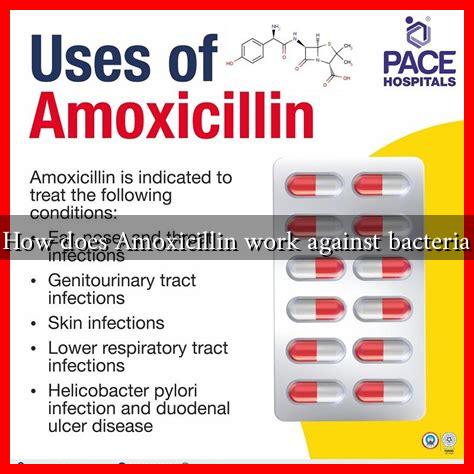
Amoxicillin is used in various clinical settings due to its effectiveness and safety profile. Some common applications include:
- Respiratory Infections: Treatment of pneumonia and bronchitis.
- Ear Infections: Management of otitis media in children.
- Skin Infections: Treatment of cellulitis and other skin infections.
- Dental Infections: Used as prophylaxis for dental procedures in patients with heart conditions.
According to the Centers for Disease Control and Prevention (CDC), amoxicillin is one of the most frequently prescribed antibiotics in the United States, underscoring its importance in clinical practice.
Resistance to Amoxicillin
Despite its effectiveness, the emergence of antibiotic resistance poses a significant challenge in treating bacterial infections. Resistance to amoxicillin can occur through various mechanisms, including:
- Production of beta-lactamase enzymes by bacteria.
- Alteration of PBPs, reducing the binding affinity of amoxicillin.
- Efflux pumps that expel the antibiotic from bacterial cells.
To combat resistance, healthcare providers are encouraged to prescribe amoxicillin judiciously and only when necessary. Patients should also complete their prescribed courses to minimize the risk of developing resistant strains.
Conclusion
Amoxicillin remains a cornerstone in the treatment of bacterial infections due to its ability to inhibit cell wall synthesis effectively. Understanding its mechanism of action, the types of bacteria it targets, and the challenges posed by antibiotic resistance is essential for its effective use. As we continue to face the threat of antibiotic resistance, it is crucial for both healthcare providers and patients to work together to ensure that antibiotics like amoxicillin remain effective tools in our medical arsenal.
For more information on antibiotic resistance and responsible antibiotic use, visit the CDC’s Antibiotic Resistance page.
