-
Table of Contents
Comparing 1 Million to 1 Billion: Understanding the Difference
When it comes to numbers, the difference between 1 million and 1 billion may seem like just a matter of adding a few zeros. However, the magnitude of this difference is far greater than meets the eye. In this article, we will delve into the comparison between 1 million and 1 billion, exploring their significance in various contexts.
The Basics: What is 1 Million?
Let’s start by understanding what exactly 1 million represents. In numerical terms, 1 million is equal to 1,000,000.
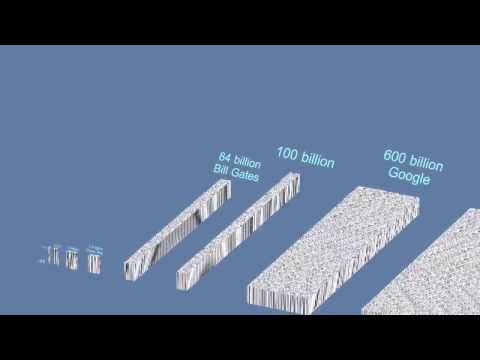
. This number is often used to quantify quantities that are relatively large but still within a manageable range. For example, a million dollars is a significant sum of money, but it is not considered an astronomical amount in the world of finance.
The Leap to 1 Billion
On the other hand, 1 billion is a whole different ball game. In numerical terms, 1 billion is equal to 1,000,000,000. This number represents a significant increase in magnitude compared to 1 million. When we talk about billions, we are entering the realm of massive quantities that have a profound impact on various aspects of society.
Examples of 1 Million vs. 1 Billion
Let’s put these numbers into perspective with some real-world examples:
- 1 million seconds is approximately 11.5 days, while 1 billion seconds is roughly 31.7 years.
- If you were to count from 1 to 1 million, it would take you about 11 days. However, counting to 1 billion would take you around 31 years!
- The net worth of a millionaire is impressive, but it pales in comparison to the wealth of a billionaire like Jeff Bezos, whose net worth exceeds $100 billion.
Implications of 1 Billion
When we talk about billions, we are often referring to quantities that have a significant impact on the world at large. For example, in the realm of technology, companies like Apple and Google have market capitalizations that exceed $1 trillion, making them some of the most valuable companies in the world.
Furthermore, when it comes to global issues such as population growth, climate change, and poverty, the scale of 1 billion becomes crucial. For instance, the world’s population recently surpassed 7.8 billion, highlighting the challenges of providing food, water, and resources for such a vast number of people.
Case Study: COVID-19 Vaccination Campaign
One recent example that illustrates the difference between 1 million and 1 billion is the global COVID-19 vaccination campaign. As of September 2021, over 5 billion vaccine doses have been administered worldwide to combat the pandemic. This staggering number demonstrates the scale of the effort required to vaccinate a significant portion of the global population.
Conclusion
In conclusion, the comparison between 1 million and 1 billion reveals the vast difference in magnitude between these two numbers. While 1 million represents a substantial quantity, 1 billion signifies a monumental scale that has far-reaching implications in various aspects of society. Understanding the significance of these numbers is essential for grasping the complexities of our world and the challenges we face on a global scale.
For further reading on the topic, you can explore this Investopedia article that delves deeper into the distinction between million and billion.