-
Table of Contents

8 Elements of Primary Health Care
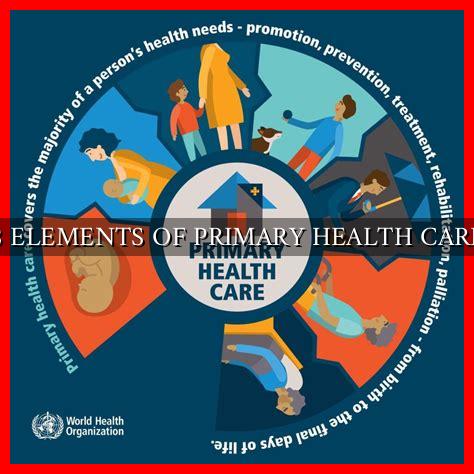
Primary health care is the cornerstone of a well-functioning healthcare system. It is the first point of contact for individuals seeking healthcare services and plays a crucial role in promoting health, preventing diseases, and managing chronic conditions. The World Health Organization (WHO) has identified eight essential elements that are integral to primary health care. In this article, we will explore these elements in detail and discuss their importance in delivering comprehensive and effective healthcare services.
1. Accessibility
Accessibility is a fundamental principle of primary health care. It ensures that healthcare services are available and easily accessible to all individuals, regardless of their socio-economic status or geographic location. This includes physical accessibility to healthcare facilities, as well as financial accessibility through affordable and equitable healthcare financing mechanisms.
- Example: In rural areas where healthcare facilities are scarce, mobile clinics or telemedicine services can improve accessibility to primary health care services.
2. Community Participation
Community participation involves engaging individuals, families, and communities in the planning, delivery, and evaluation of healthcare services. It empowers communities to take ownership of their health and well-being and ensures that healthcare services are culturally sensitive and responsive to community needs.
- Case Study: The Barefoot College in India trains women from rural communities to become healthcare providers, promoting community participation in primary health care delivery.
3. Intersectoral Collaboration
Intersectoral collaboration involves partnerships between different sectors, such as health, education, and social services, to address the social determinants of health and promote holistic approaches to healthcare. It recognizes that health is influenced by factors beyond the healthcare system and requires a multi-sectoral response.
- Statistic: According to the WHO, intersectoral collaboration can lead to a 20% reduction in premature mortality.
4. Appropriate Technology
Appropriate technology refers to the use of cost-effective and culturally appropriate technologies to deliver healthcare services. It includes tools, equipment, and information systems that are tailored to the needs of primary health care providers and their communities.
- Example: Mobile health apps can help primary health care providers in remote areas access medical information, communicate with specialists, and track patient data.
5. Health Promotion
Health promotion focuses on empowering individuals and communities to take control of their health through education, awareness, and behavior change interventions. It aims to prevent diseases and promote healthy lifestyles through targeted interventions and community-based initiatives.
- External Link: Learn more about health promotion from the WHO.
6. Equity
Equity in primary health care ensures that healthcare services are distributed fairly and without discrimination. It addresses disparities in access to healthcare based on factors such as income, gender, ethnicity, and geography, and promotes universal access to essential health services.
- Statistic: According to UNICEF, achieving health equity could prevent 1.3 million child deaths annually.
7. Multisectoral Approach
A multisectoral approach involves collaboration between different sectors, such as health, education, and agriculture, to address complex health challenges and promote comprehensive solutions. It recognizes that health outcomes are influenced by a range of factors and requires a coordinated response from multiple sectors.
- Case Study: The Alma-Ata Declaration in 1978 called for a multisectoral approach to primary health care, emphasizing the role of social and economic development in improving health outcomes.
8. Sustainability
Sustainability in primary health care involves ensuring that healthcare services are affordable, efficient, and environmentally sustainable in the long term. It includes strategies to strengthen health systems, build capacity, and mobilize resources to support the delivery of essential health services.
Summary
Primary health care is a vital component of healthcare systems worldwide, providing essential services to individuals and communities. The eight elements of primary health care outlined by the WHO form the foundation for delivering comprehensive, accessible, and effective healthcare services. By focusing on accessibility, community participation, intersectoral collaboration, appropriate technology, health promotion, equity, a multisectoral approach, and sustainability, primary health care can address the diverse health needs of populations and promote better health outcomes for all.