

-
Table of Contents
Electoral College vs Popular Vote: Understanding the Key Differences
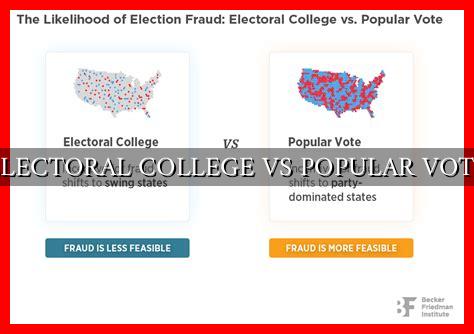
When it comes to electing the President of the United States, the debate between the Electoral College and the popular vote has been a longstanding issue. Both systems have their own set of advantages and disadvantages, and understanding the differences between them is crucial in grasping the complexities of the American electoral process.
The Electoral College: How Does It Work?
The Electoral College is a system established by the Founding Fathers in the U.S. Constitution, where each state is allocated a certain number of electors based on its representation in Congress. The total number of electors is 538, with a majority of 270 needed to win the presidency.
- Each state is assigned a number of electors equal to its total number of Senators and Representatives in Congress.
- Most states have a winner-takes-all system, where the candidate who wins the popular vote in the state receives all of its electoral votes.
- Electors then cast their votes for the candidate who won the popular vote in their state.
The Popular Vote: A Direct Democracy Approach
On the other hand, the popular vote is a simple tally of all votes cast by individual citizens across the country. In a popular vote system, the candidate who receives the most votes nationwide wins the election, regardless of state boundaries.
- Advocates of the popular vote argue that it is a more democratic approach, as it ensures that every vote counts equally.
- Opponents, however, raise concerns about the potential for urban areas to dominate the election, leaving rural areas underrepresented.
Pros and Cons of Each System
Electoral College
- Ensures that smaller states have a voice in the election process.
- Prevents the dominance of heavily populated urban areas.
- Can lead to discrepancies between the popular vote and the electoral vote, as seen in the 2016 election.
Popular Vote
- Reflects the will of the majority of voters across the country.
- Eliminates the possibility of a candidate winning the presidency without winning the popular vote.
- May neglect the interests of smaller states and rural areas.
Case Study: The 2016 Presidential Election
In the 2016 election, Donald Trump won the presidency with 304 electoral votes, despite losing the popular vote to Hillary Clinton by nearly 3 million votes.
. This discrepancy reignited the debate over the Electoral College and its role in the American electoral system.
Proponents of the Electoral College argue that it prevents densely populated urban areas from dictating the outcome of the election, while critics point to cases like 2016 as evidence that the system can lead to undemocratic results.
Conclusion: Finding a Balance
While both the Electoral College and the popular vote have their strengths and weaknesses, finding a balance between representation and democracy is crucial in shaping the future of the American electoral process. Whether through reforms to the Electoral College or a shift towards a popular vote system, the goal should be to ensure that every vote counts and that the will of the people is accurately reflected in the outcome of presidential elections.
By understanding the key differences between these two systems and the implications of each, we can work towards a more inclusive and representative electoral process for all Americans.

