


-
Table of Contents
The Periodic Table Trends
The periodic table is a fundamental tool in chemistry that organizes elements based on their atomic number, electron configuration, and recurring chemical properties. Understanding the trends within the periodic table can provide valuable insights into the behavior of elements and their interactions. In this article, we will explore some of the key trends found in the periodic table and their significance.
Atomic Radius
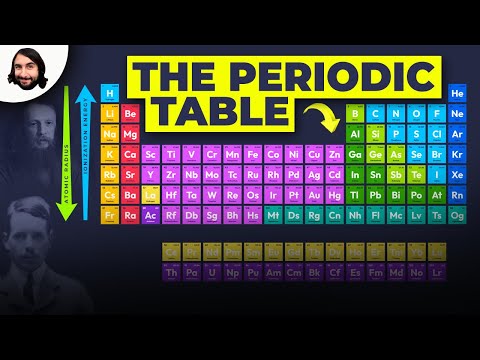
One of the most important trends in the periodic table is the atomic radius, which refers to the size of an atom. The atomic radius generally decreases as you move from left to right across a period and increases as you move down a group. This trend can be explained by the increasing number of protons in the nucleus, which attracts the electrons more strongly and pulls them closer to the nucleus.
- Example: In the second period of the periodic table, the atomic radius decreases from left to right.

. For instance, lithium has a larger atomic radius than beryllium.
Electronegativity
Electronegativity is another important trend in the periodic table, which measures an atom’s ability to attract and hold onto electrons. Electronegativity generally increases from left to right across a period and decreases as you move down a group. This trend is influenced by factors such as atomic size and nuclear charge.
- Example: Fluorine, located in the top right corner of the periodic table, has the highest electronegativity value among all elements.
Ionization Energy
Ionization energy is the energy required to remove an electron from an atom. This trend also increases from left to right across a period and decreases as you move down a group. Elements with high ionization energy tend to form cations, while elements with low ionization energy tend to form anions.
- Example: The alkali metals in Group 1 of the periodic table have low ionization energies, making them highly reactive.
Electron Affinity
Electron affinity is the energy released when an atom gains an electron. This trend generally increases from left to right across a period and decreases as you move down a group. Elements with high electron affinity tend to form anions, while elements with low electron affinity tend to lose electrons easily.
- Example: Chlorine, a halogen in Group 17, has a high electron affinity and readily gains an electron to form a chloride ion.
Conclusion
Understanding the trends within the periodic table is essential for predicting the behavior of elements and their compounds. By analyzing factors such as atomic radius, electronegativity, ionization energy, and electron affinity, chemists can make informed decisions about chemical reactions and properties. The periodic table serves as a valuable tool for organizing and interpreting the vast array of elements in the universe.
For further exploration of the periodic table trends, you can refer to this interactive periodic table provided by the Royal Society of Chemistry.

