


-
Table of Contents
How Does 3D Printing Work
3D printing, also known as additive manufacturing, is a revolutionary technology that has transformed various industries by allowing the creation of three-dimensional objects from digital files. This process involves building objects layer by layer, unlike traditional subtractive manufacturing methods. Let’s delve into how 3D printing works and the key components involved in this innovative process.
The Basics of 3D Printing
At its core, 3D printing involves the following key steps:
- Creating a 3D model: The first step in 3D printing is to create a digital design of the object you want to print. This can be done using computer-aided design (CAD) software or by scanning an existing object using a 3D scanner.
- Slicing the model: The 3D model is then sliced into thin layers using slicing software. Each layer serves as a blueprint for the 3D printer to follow during the printing process.
- Printing the object: The 3D printer reads the sliced layers and starts building the object layer by layer.

. This can be done using various materials such as plastic, metal, or even food ingredients.
- Post-processing: Once the object is printed, it may require post-processing steps such as removing support structures, sanding, or painting to achieve the desired finish.
The Components of a 3D Printer
A typical 3D printer consists of the following components:
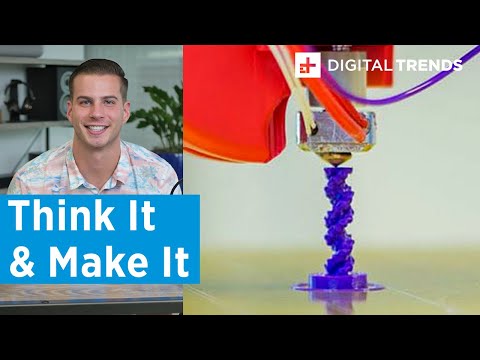
- Extruder: The extruder is responsible for melting the printing material (filament) and depositing it layer by layer to create the object.
- Build platform: The build platform is where the object is built. It moves up or down to accommodate each layer of the object being printed.
- Control system: The control system coordinates the movement of the extruder and build platform based on the instructions from the slicing software.
- Printing material: 3D printers use various materials such as plastic, metal, resin, or even biological materials to create objects.
Types of 3D Printing Technologies
There are several types of 3D printing technologies, each with its unique process and applications:
- Fused Deposition Modeling (FDM): FDM is one of the most common 3D printing technologies that uses thermoplastic filaments to create objects layer by layer.
- Stereolithography (SLA): SLA uses a liquid resin that is cured by a UV laser to create high-resolution objects with smooth surfaces.
- Selective Laser Sintering (SLS): SLS uses a laser to sinter powdered materials such as nylon or metal to create durable objects.
Applications of 3D Printing
3D printing has revolutionized various industries, including healthcare, aerospace, automotive, and consumer goods. Some notable applications of 3D printing include:
- Custom prosthetics and implants in healthcare
- Rapid prototyping and tooling in manufacturing
- Customized jewelry and fashion accessories
Conclusion
3D printing is a transformative technology that has the potential to disrupt traditional manufacturing processes and unlock new possibilities in design and production. By understanding how 3D printing works and the key components involved, we can appreciate the impact of this technology on various industries and its potential for innovation.
For more information on the latest advancements in 3D printing technology, check out this article.
