-
Table of Contents
Comparing 1/2 and 1/4: Understanding the Differences
When it comes to fractions, understanding the differences between 1/2 and 1/4 is crucial for various mathematical calculations and real-life applications. In this article, we will delve into the comparison of these two common fractions, exploring their properties, uses, and significance.
The Basics of 1/2 and 1/4
Before we dive into the comparison, let’s first establish the basic definitions of 1/2 and 1/4:
- 1/2: This fraction represents one-half of a whole. It is equivalent to 0.5 in decimal form.
- 1/4: This fraction represents one-fourth of a whole. It is equivalent to 0.25 in decimal form.
Properties of 1/2 and 1/4
While both 1/2 and 1/4 are fractions that represent parts of a whole, they have distinct properties that set them apart:
- Numerator and Denominator: In 1/2, the numerator is 1 and the denominator is 2. In 1/4, the numerator is 1 and the denominator is 4.
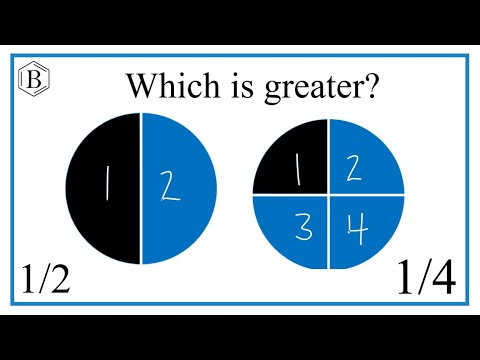
- Size Comparison: 1/2 is larger than 1/4, as it represents half of a whole compared to one-fourth.
- Decimal Equivalents: 1/2 is equivalent to 0.5, while 1/4 is equivalent to 0.25.
Real-Life Applications
Understanding the differences between 1/2 and 1/4 is essential in various real-life scenarios, such as:
- Cooking: Recipes often call for measurements in fractions, such as 1/2 cup of flour or 1/4 teaspoon of salt.
- Construction: Builders use fractions to measure materials, with 1/2 and 1/4 inch being common measurements for thickness.
Mathematical Calculations
When it comes to mathematical calculations, knowing how to compare and manipulate fractions like 1/2 and 1/4 is essential.
. Here are some key points to consider:
- Adding and Subtracting: When adding or subtracting fractions with different denominators, such as 1/2 and 1/4, you need to find a common denominator before performing the operation.
- Multiplying and Dividing: Multiplying fractions is straightforward – simply multiply the numerators and denominators. Dividing fractions involves multiplying by the reciprocal of the second fraction.
Conclusion
In conclusion, understanding the differences between 1/2 and 1/4 is essential for various mathematical calculations and real-life applications. While both fractions represent parts of a whole, they have distinct properties and uses that set them apart. By grasping the nuances of these fractions, you can enhance your mathematical skills and apply them effectively in everyday situations.
For further reading on fractions and mathematical concepts, check out this comprehensive guide to fractions.