-
Table of Contents
- Understanding Compare and Contrast
- What is Compare and Contrast?
- Key Elements of Compare and Contrast
- How to Use Compare and Contrast Effectively
- 1. Define the Purpose:
- 2. Identify Key Criteria:
- 3. Organize the Information:
- Why Compare and Contrast is Important
- 1. Enhances Critical Thinking:
- 2.

. Facilitates Decision-Making:
- 3. Improves Understanding:
- Conclusion
Understanding Compare and Contrast
When it comes to analyzing and understanding information, one of the most effective tools at our disposal is the compare and contrast method. This technique allows us to identify similarities and differences between two or more subjects, helping us gain a deeper insight into their characteristics and relationships. In this article, we will explore what compare and contrast is, how it can be used effectively, and why it is an essential skill in various fields.
What is Compare and Contrast?
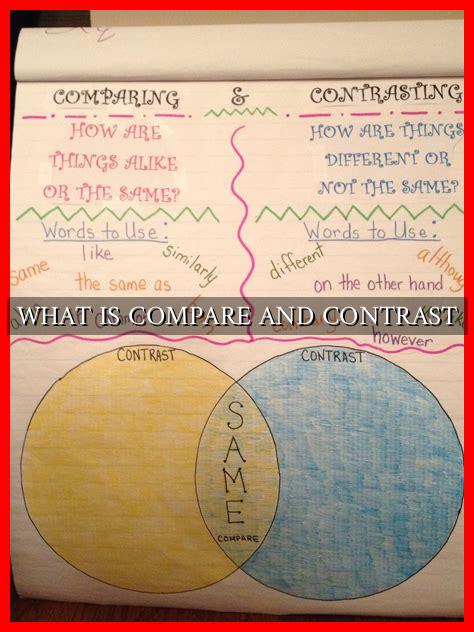
Compare and contrast is a method of analyzing and evaluating two or more subjects by examining their similarities and differences. This technique is commonly used in academic writing, research, and critical thinking to help readers understand the relationships between different concepts, ideas, or objects.
Key Elements of Compare and Contrast
- Similarities: This involves identifying common characteristics or features shared by the subjects being compared.
- Differences: This focuses on highlighting the distinctions or unique qualities that set the subjects apart from each other.
- Analysis: By comparing and contrasting, we can analyze the significance of the similarities and differences, drawing conclusions and insights from the information presented.
How to Use Compare and Contrast Effectively
When using the compare and contrast method, it is essential to follow a structured approach to ensure a comprehensive analysis. Here are some tips on how to use compare and contrast effectively:
1. Define the Purpose:
Before comparing and contrasting subjects, clearly define the purpose of the analysis. Are you looking to highlight similarities, differences, or both? Understanding the objective will guide your comparison process.
2. Identify Key Criteria:
Determine the criteria or aspects you will use to compare and contrast the subjects. This could include characteristics, features, functions, or any other relevant factors that will help in the analysis.
3. Organize the Information:
Present the information in a structured manner, such as using a Venn diagram, table, or list format. This will make it easier for readers to visualize the similarities and differences between the subjects.
Why Compare and Contrast is Important
Compare and contrast is a valuable skill that has numerous benefits in various fields, including education, business, and decision-making. Here are some reasons why compare and contrast is important:
1. Enhances Critical Thinking:
By comparing and contrasting different subjects, individuals are encouraged to think critically and analyze information from multiple perspectives. This helps in developing analytical skills and problem-solving abilities.
2. Facilitates Decision-Making:
When faced with choices or options, the compare and contrast method can help individuals evaluate the pros and cons of each alternative, leading to informed decision-making.
3. Improves Understanding:
Comparing and contrasting subjects allows for a deeper understanding of their characteristics and relationships. This can lead to new insights and discoveries that may not have been apparent initially.
Conclusion
In conclusion, compare and contrast is a powerful method of analysis that helps us gain a deeper understanding of different subjects by highlighting their similarities and differences. By using this technique effectively, we can enhance our critical thinking skills, make informed decisions, and improve our overall understanding of complex concepts. Whether in academic research, business analysis, or everyday decision-making, compare and contrast is a valuable tool that can lead to valuable insights and discoveries.
For further reading on the topic of compare and contrast, you can explore this guide on how to write a compare and contrast essay.