

-
Table of Contents
The 8th Amendment: Understanding Its Significance and Impact
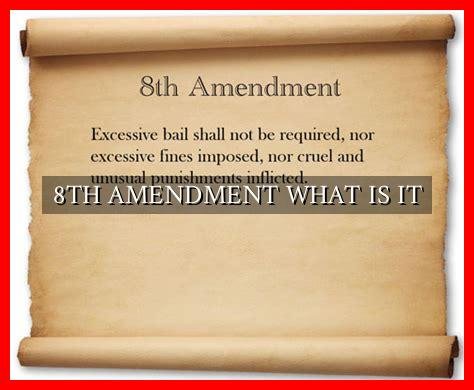
The 8th Amendment to the United States Constitution is a crucial component of the Bill of Rights that prohibits the imposition of cruel and unusual punishment. This fundamental right serves as a cornerstone of the American legal system, ensuring that individuals are protected from excessive or inhumane treatment by the government. Let’s delve deeper into the 8th Amendment, exploring its origins, interpretation, and implications.
Origins of the 8th Amendment
The 8th Amendment was ratified as part of the Bill of Rights on December 15, 1791. It was inspired by English common law principles that sought to prevent the use of torture and other barbaric forms of punishment. The framers of the Constitution recognized the importance of safeguarding individual rights and limiting the power of the government to inflict undue harm on its citizens.
Interpretation of the 8th Amendment
The 8th Amendment prohibits the government from imposing punishments that are considered cruel and unusual.

. While the language of the amendment may seem straightforward, its interpretation has evolved over time through landmark Supreme Court cases. One such case is Furman v. Georgia, where the Court ruled that the death penalty, as applied at the time, violated the 8th Amendment’s prohibition against cruel and unusual punishment.
Implications of the 8th Amendment
The 8th Amendment has far-reaching implications for the criminal justice system, influencing the types of punishments that can be imposed on individuals convicted of crimes. For example, the Supreme Court has ruled that certain practices, such as solitary confinement for extended periods, may violate the 8th Amendment’s prohibition against cruel and unusual punishment.
- Capital punishment: The 8th Amendment has been central to debates surrounding the constitutionality of the death penalty. Opponents argue that the death penalty constitutes cruel and unusual punishment, while proponents maintain that it is a necessary deterrent for serious crimes.
- Prison conditions: The 8th Amendment also applies to the treatment of individuals in prison. Courts have ruled that overcrowded and unsanitary prison conditions can violate the prohibition against cruel and unusual punishment.
Conclusion
The 8th Amendment plays a vital role in protecting the rights of individuals and ensuring that the government does not overstep its bounds in meting out punishment. By prohibiting cruel and unusual punishment, the 8th Amendment upholds the principles of justice and fairness that are essential to a democratic society. As the interpretation of the 8th Amendment continues to evolve, it will remain a cornerstone of American jurisprudence for years to come.
