

-
Table of Contents
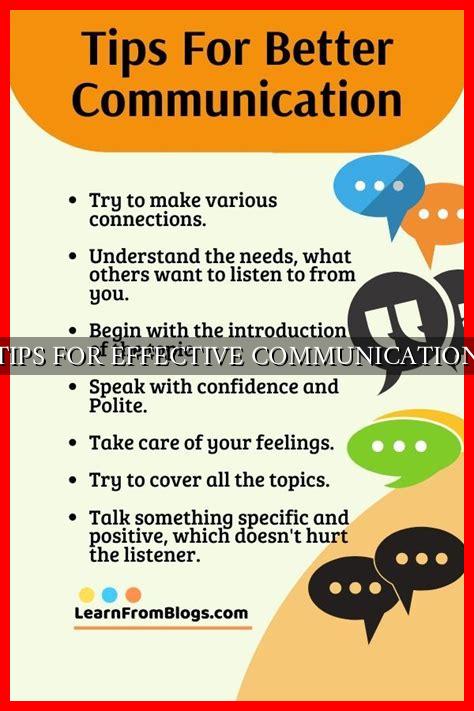
Tips for Effective Communication
Effective communication is essential in all aspects of life, whether it be in personal relationships, professional settings, or even in everyday interactions. Being able to convey your thoughts and ideas clearly can lead to better understanding, stronger relationships, and increased productivity. In this article, we will explore some tips for improving your communication skills.
Active Listening
One of the most important aspects of effective communication is active listening. This means fully concentrating on what is being said rather than just passively hearing the words. Active listening involves not only hearing the words but also understanding the emotions and intentions behind them.
- Make eye contact with the speaker
- Ask clarifying questions
- Paraphrase what you heard to ensure understanding
By actively listening, you show respect for the speaker and create a more meaningful dialogue.
Body Language
Nonverbal cues play a significant role in communication.

. Your body language can convey more than your words, so it’s essential to be mindful of your gestures, facial expressions, and posture.
- Maintain eye contact
- Use open and welcoming gestures
- Pay attention to the other person’s body language
By aligning your body language with your words, you can enhance the clarity and effectiveness of your communication.
Be Clear and Concise
When communicating, it’s crucial to be clear and concise in your message. Avoid using jargon or overly complex language that may confuse the listener. Instead, strive to convey your thoughts in a straightforward and easy-to-understand manner.
- Avoid rambling or going off on tangents
- Organize your thoughts before speaking
- Use examples or analogies to clarify your points
By being clear and concise, you can ensure that your message is understood accurately.
Empathy
Empathy is the ability to understand and share the feelings of another person. When communicating, it’s essential to show empathy towards the other party, as it fosters a sense of connection and understanding.
- Acknowledge the other person’s emotions
- Validate their feelings
- Show compassion and understanding
By demonstrating empathy, you can build trust and rapport with the other person, leading to more effective communication.
Practice Active Communication
Communication is a two-way street, so it’s essential to actively engage in conversations rather than just passively receiving information. Practice active communication by asking questions, seeking feedback, and encouraging dialogue.
- Ask open-ended questions to encourage discussion
- Seek clarification if something is unclear
- Provide feedback to show that you are actively listening
By actively participating in communication, you can ensure that both parties are fully engaged and invested in the conversation.
Conclusion
Effective communication is a vital skill that can enhance all aspects of your life. By practicing active listening, being mindful of your body language, communicating clearly and concisely, showing empathy, and engaging in active communication, you can improve your communication skills and build stronger relationships. Remember that communication is a continuous process that requires effort and practice, so keep honing your skills to become a more effective communicator.
For more tips on effective communication, check out this Forbes article.
