

-
Table of Contents
Amlodipine and Alcohol: Is It Safe?
Amlodipine is a widely prescribed medication used primarily to treat high blood pressure and angina. As with many medications, patients often wonder about the safety of consuming alcohol while taking amlodipine. This article delves into the interaction between amlodipine and alcohol, examining the potential risks and providing guidance for those on this medication.
Understanding Amlodipine
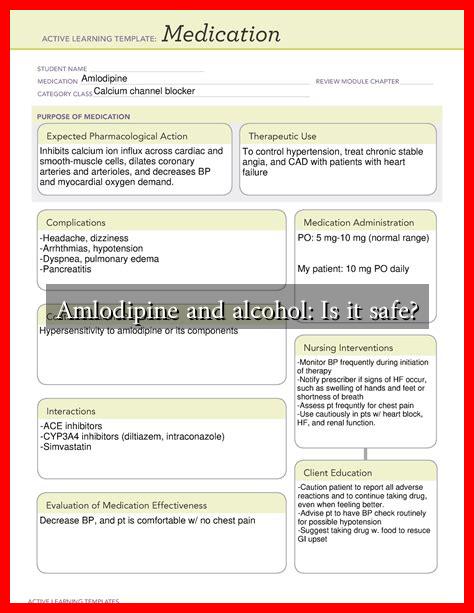
Amlodipine belongs to a class of drugs known as calcium channel blockers. It works by relaxing the blood vessels, allowing blood to flow more easily, which helps to lower blood pressure. It is commonly prescribed for:
- Hypertension (high blood pressure)
- Angina (chest pain due to reduced blood flow to the heart)
- Coronary artery disease
While effective, amlodipine can have side effects, including dizziness, fatigue, and swelling in the legs or ankles. Understanding how alcohol interacts with this medication is crucial for patients seeking to manage their health effectively.
The Effects of Alcohol on Blood Pressure
Alcohol consumption can have varying effects on blood pressure. Moderate drinking may lead to a temporary decrease in blood pressure, while excessive drinking can cause significant spikes. According to the American Heart Association, heavy drinking can lead to hypertension and other cardiovascular issues.
Potential Risks of Combining Amlodipine and Alcohol
Combining amlodipine with alcohol can pose several risks, including:
- Increased Side Effects: Both amlodipine and alcohol can cause dizziness and drowsiness. When taken together, these effects may be amplified, increasing the risk of falls and accidents.
- Blood Pressure Fluctuations: Alcohol can interfere with the blood pressure-lowering effects of amlodipine, potentially leading to uncontrolled hypertension.
- Dehydration: Alcohol is a diuretic, which can lead to dehydration. This can exacerbate the side effects of amlodipine, such as dizziness and lightheadedness.
Case Studies and Statistics
Research indicates that patients taking antihypertensive medications, including amlodipine, should be cautious with alcohol consumption. A study published in the Journal of Hypertension found that patients who consumed alcohol while on blood pressure medications experienced less effective blood pressure control compared to those who abstained. Furthermore, a survey conducted by the National Institute on Alcohol Abuse and Alcoholism revealed that nearly 30% of individuals with hypertension reported binge drinking, which can significantly impact their treatment outcomes.
Guidelines for Alcohol Consumption While on Amlodipine
For those taking amlodipine, it is essential to approach alcohol consumption with caution. Here are some guidelines to consider:
- Consult Your Doctor: Always discuss your alcohol consumption with your healthcare provider, who can provide personalized advice based on your health status.
- Limit Intake: If you choose to drink, do so in moderation. The Centers for Disease Control and Prevention (CDC) defines moderate drinking as up to one drink per day for women and up to two drinks per day for men.
- Monitor Your Body: Pay attention to how your body reacts when consuming alcohol while on amlodipine. If you experience increased dizziness or other side effects, consider reducing or eliminating alcohol intake.
Conclusion
In summary, while it may be possible to consume alcohol in moderation while taking amlodipine, it is essential to be aware of the potential risks involved. The combination can lead to increased side effects, fluctuations in blood pressure, and dehydration. Always consult with your healthcare provider for personalized advice and guidelines. By understanding the implications of mixing amlodipine and alcohol, patients can make informed decisions that support their health and well-being.
