-
Table of Contents
4 Types of Methods in Java
Java is a versatile and powerful programming language that offers various methods to perform different tasks.
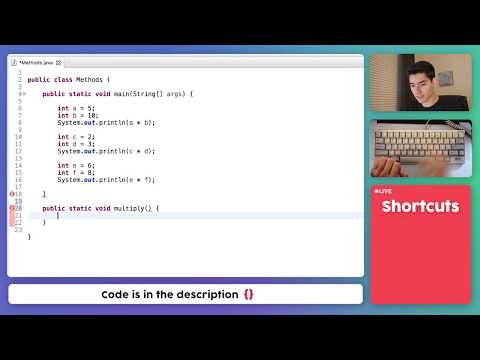
. Methods in Java are blocks of code that perform a specific task and can be called upon to execute that task. In this article, we will explore four types of methods in Java and how they can be used in programming.
1. Static Methods
Static methods in Java are associated with the class rather than with any specific instance of the class. These methods can be called directly using the class name without creating an object of the class. Static methods are commonly used for utility functions that do not require any instance variables.
- Example:
“`java
public class MathUtils {
public static int add(int a, int b) {
return a + b;
}
}
“`
In the above example, the add method is a static method that can be called using the class name MathUtils.add(2, 3).
2. Instance Methods
Instance methods in Java are associated with objects of the class. These methods can access instance variables and other instance methods of the class. Instance methods are called on objects of the class and can modify the state of the object.
- Example:
“`java
public class Car {
private String model;
public void setModel(String model) {
this.model = model;
}
public String getModel() {
return model;
}
}
“`
In the above example, the setModel and getModel methods are instance methods that operate on the instance variable model of the Car class.
3. Constructor Methods
Constructor methods in Java are special methods that are used to initialize objects of a class. Constructors have the same name as the class and do not have a return type. They are called when an object of the class is created using the new keyword.
- Example:
“`java
public class Person {
private String name;
public Person(String name) {
this.name = name;
}
}
“`
In the above example, the Person class has a constructor that initializes the name of the person when a new Person object is created.
4. Recursive Methods
Recursive methods in Java are methods that call themselves to solve a problem. Recursion is a powerful technique that allows a method to break down a complex problem into smaller, more manageable subproblems. Recursive methods have a base case that defines when the recursion should stop.
- Example:
“`java
public class Factorial {
public static int factorial(int n) {
if (n == 0) {
return 1;
} else {
return n * factorial(n – 1);
}
}
}
“`
In the above example, the factorial method calculates the factorial of a number using recursion by calling itself with a smaller value until it reaches the base case of n = 0.
Summary
In conclusion, Java offers a variety of methods that can be used to perform different tasks in programming. Static methods are associated with the class, instance methods are associated with objects of the class, constructor methods are used to initialize objects, and recursive methods call themselves to solve problems. By understanding and utilizing these different types of methods, programmers can write efficient and effective Java code.